
Green School Initiative
- 3596 trees planted
- 6404 left
Green School Initiative is an environmental restoration based project aim to use the convening power of sports to drive restoration and climate actions in schools and local communities.


Main Objectives
The main goal is to educate, plant and distribute over 10,000 trees through sports engagements in schools and communities.
- Plant 10,000 trees in schools and communities through sports engagements.
- Educate 5000 pupils/students on local conservation methods.
- Distribute 1000 conservation and restoration book/charts.
Race to zero campaign
“Helping to deliver a healthier, fairer, net zero world.” The race to zero is a global campaign rallying non-state actors – including companies, cities, regions and educational institutions to take rigorous and immediate action to halve global emissions by 2023 and deliver a healthier, fairer, net zero world. .
Our Commitment
In support of our role in accelerating climate action across Cameroon territories, CCF commits to fostering and promoting environment education through tree planting and growing. CCF will provide increased technical assistance to local partners and government agencies to assist and enable the conservation of Cameroon’s threatened environment, biodiversity, and natural resources into perpetuity. Raising Environmental Awareness, Protect the Rights of Indigenous People & empower them to protect the Environment. CCF works will in close collaboration with a network of local/regional partner agencies and financial institutions responsible for implementing agreed priority projects and longer-term programs, and a network of international partner agencies that have kindly provided the majority of funding, diverse technical support, and personnel training opportunities needed to develop and help sustain conservation activities in Cameroon
United nations decade on ecosytem restoration
Launched in June 2021 by the United Nations, the UN Decade of Ecosystem Restoration galvanise global efforts and cooperation for the restoration of degraded and destroy ecosystem.
Our pledge
Cameroon Conservation Foundation (CCF) recognizes ecosystem rural communities as a key stakeholder in catalyzing restoration effort to enhance progress in sustainable rural livelihood. The UN Decade of Ecosystem Restoration vision is very important for us and aligns with our mandate which is to promote the establishment of integrated, long-term and locally-based biodiversity conservation and development programs. Improving dissemination of knowledge, enhanced management practices and the active participation and collaboration of relevant stakeholders, particularly those most dependent upon the natural resources of each region. CCF strongly declares its full support and endorsement for the UN Decade of Ecosystem Restoration, we commit to:
1. Engage in high-quality scientific research, provide consultancy and policy advice to protect Cameroon endangered habitats, support biodiversity conservation and sustainable management in the Cameroon forest resources. 2. Provide long-term support and action plan towards biodiversity conservation in Cameroon, for the sustainable use and management of forest resources, while preserving the rich biodiversity of Cameroon. 3. Encourage effective community-based forest management that supports biodiversity conservation and support the implementation of strategies for sustainable use of forests resources by stakeholders. 4. Ensure permanent ecological and socio-economic monitoring systems to assess the trends in biodiversity conservation and livelihoods. 5. Conduct research and provide educational outreach to the public, promote policies that protect endangered habitats while focusing on building the capacity of grassroots conservation efforts through partnership with local civil societies, public sector organizations and research institutions.
Stop Wildlife Crime
Due largely to poaching, Cameroon has lost more than 60% of its forest elephants. Wildlife censuses have revealed that forest elephant populations have declined by approximately 66 per cent over eight years in an area covering almost 6 million hectares. Law courts in Cameroon are getting tougher on wildlife crime as the country battles against ivory traffickers threatening to decimate elephants in the country Despite this provision of the law, elephant poaching has been in the rise in recent years highlighting the need for urgent actions in stopping the demand for illegal wildlife parts and product. CCF stand with WWF to stop wildlife crime by advocating in support of rangers and other on the frontline of conservation. It is envisioned that the only realistic means of achieving such a goal is via the establishment of integrated, long-term and locally-based biodiversity conservation and development programs, that include improved dissemination of knowledge, enhanced management practices and the active participation and collaboration of relevant stakeholders, particularly those most dependent upon the natural resources of each region.
No Plastic in Nature
A plastic free Ocean for All. Plastic related pollution has significant impact on the environment and its negatively affect our communities and health. In 2012, Cameroon issued a ban of the use of non-biodegradable plastic packaging of less than 60 microns, which came into force in April 2014. In line with the legally binding global treaty expected to be in place by the end of 2024, CCF urges policy makers and local councils in Cameroon to act strongly and decisively in developing clear waste management plans to regulate the proper disposal of single-use plastic. CCF advocates for design requirements to ensure all plastic can be easily and safely reused and recycled. By this CCF is engaging with communities who are being most impacted supporting the advocacy effort.
Rights of Nature (RoN) Africa Awareness Campaign
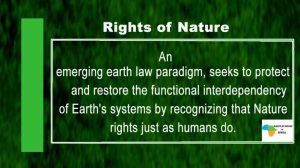
The Rights of Nature movement seeks to establish in law that Nature has fundamental rights. It represents a new, Earth-centered legal paradigm.
Africa represents nearly a quarter of Earth’s land and is home to 8 of 36 of the world’s biodiversity hotspots. African nations are the most vulnerable to threats posed by climate change including warming, prolonged periods of drought, extreme weather conditions, increased desertification, sea level rise, water pollution, and civil unrest. Africa also accounts for 30% of the world’s remaining mineral resources. The mining industry is one of the leading causes of desertification, land degradation, and groundwater contamination in Africa. Establishing rights of nature in Africa permanently protects ecosystems in the face of climate change and resource exploitation while providing a platform for environmental and conservation partnerships, which could be the most direct path we have to combat the effects of climate change and overexploitation of resources. Rights of nature also benefits humans because thriving ecosystems mean ample food, clean water, and sustainable livelihoods. While there is no one-size-fits-all solution, giving nature rights could provide the protection necessary to shift the narrative.

Main Objectives
The main goal is to educate, plant and distribute over 10,000 trees through sports engagements in schools and communities.
- Gain global support and momentum for #RoNAfrica
- Achieve one legislative or constitutional victory to grant an ecosystem in Africa legal rights
- Educate and raise awareness about the importance of RoN reaching 500+ audiences.
- Reach out to, at minimum, 55 countries on the African continent with support from CBO